In Toto Ed
Year 11 Revision tips

Revision can feel overwhelming, especially when exams are just around the corner. The key is to stay organised, make your study sessions manageable, and use techniques that help you remember and apply what you’ve learnt.
In this guide, Assistant Head (Teaching & Learning) Daisy has put together practical tips for Year 11 students, along with some tried-and-tested tools like flash cards and knowledge organisers, to make revision more effective, and less stressful!
1. Divide your revision time into chunks
- 20 minutes of revision with a 10-minute break
- Build your revision timetable around other commitments, e.g. hobbies or clubs
- Break each subject into manageable chunks (for example, by topic, or by question)
- Keep your revision notes organised and in a folder, so you can find each subject easily
- Use a variety of different revision techniques (there are some ideas below)
- Your phone is not your friend! Put it in a different room so you are not distracted during revision sessions
2. Flash cards
Flash cards allow you to practice summarising information and can help you identify any gaps in your learning. You can use them in a variety of different ways:
- Condense notes about a specific topic onto a card
- Write a term on one side and a definition on the other side
- Write a question on one side and answer on the other side
- Write a key equation on one side with its use in practice on the other side

3. Knowledge organisers
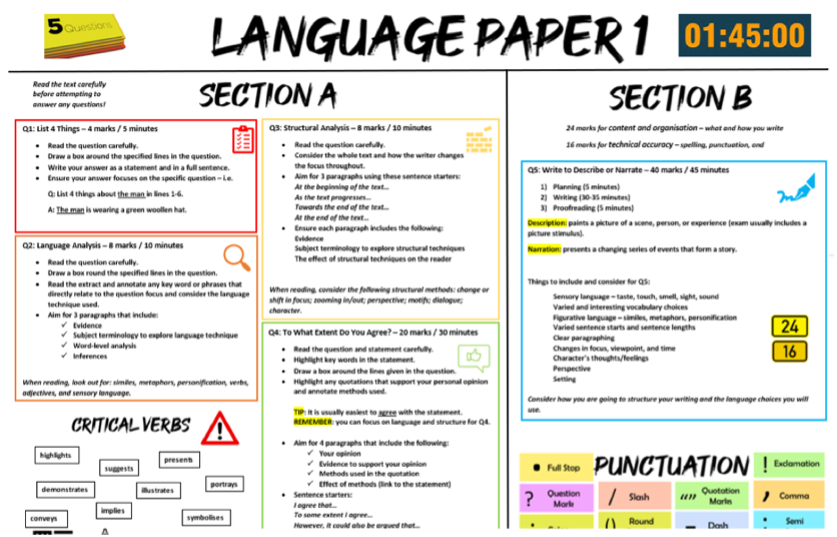
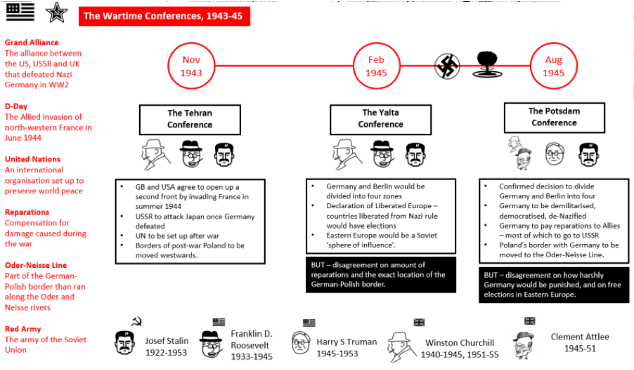
A knowledge organiser is a single-sided sheet of paper that outlines the most important information needed for a particular topic or assessment. Knowledge organisers are also an important revision tool and can outline the following depending on subject area: key vocabulary, diagrams, formulae, dates, quotations etc.
Some examples layouts you could try: