
In Toto Ed
STEM update - October 2026
Our students have had a busy and engaging start to the Autumn Term in STEM, exploring new concepts and putting their learning into practice across Science and Maths. From hands-on experiments and electrical circuits to number skills and algebra, students across all year groups are building their knowledge, developing practical skills and growing in confidence.
Science
Year 7
Year 7 students have been learning about the properties of different states of matter. They have explored the similarities and differences between solids, liquids and gases, including differences in density, particle arrangement and particle movement. Students have developed their understanding of how changes in particle arrangement and movement explain changes of state, shape and density.
Students particularly enjoyed practical investigations into the melting of ice and the cooling of water, allowing them to observe and record changes in temperature and state.
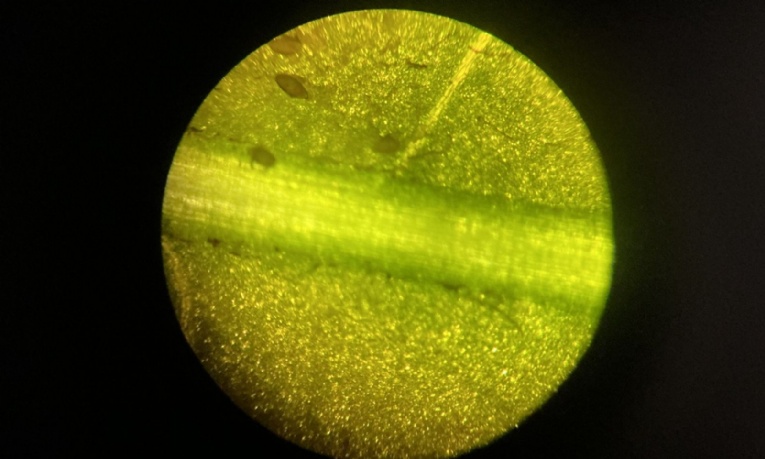
Students have also been introduced to cells as the fundamental units of living organisms. They have learnt how to use a light microscope to observe, interpret and record cell structures.
Year 8
Year 8 students have been learning about atoms and molecules as particles, including the organisation of the periodic table into periods and groups. They have explored the differences between metals and non-metals and considered the principles that underpin Mendeleev's development of the periodic table.
Students have also investigated the properties of metals and non-metals.
In practical work, students have enjoyed making electrical circuits and learning about electrical charge. They have explored how positive and negative charges can become separated when objects are rubbed together through the transfer of electrons, as well as the forces that act between charged objects.
Year 9
Year 9 students have been developing their understanding of cells as the basic structural units of all organisms. They have explored how cell adaptations relate to their functions and have studied the main subcellular structures found in eukaryotic and prokaryotic cells.
Students particularly enjoyed using microscopes to observe onion cells, developing their practical skills in preparing, observing and recording specimens.
Students are also learning about changes in temperature, including how temperature affects the motion and spacing of particles. They have explored energy changes and changes of state.
Practical work has been an important part of this learning, with students enjoying making and recording measurements using thermometers and infrared probes.
Year 10
Year 10 students are currently learning about electricity. They have been developing their understanding of charge, including the quantity of charge flowing as the product of current and time.
Students have explored the domestic AC supply, including the roles of live, neutral and earth wires, together with appropriate electrical safety measures.
They have also developed their practical and diagrammatic skills by:
- Drawing circuit diagrams.
- Measuring resistance using potential difference and current measurements.
- Investigating equivalent resistance in series circuits.
- Exploring the relationships between current, resistance and voltage.
- Investigating different circuit elements and interpreting their graphical representations.
Students have particularly enjoyed the practical investigation of resistance in series circuits and using measurements to explore relationships between current, voltage and resistance.
Maths
Year 7
Year 7 students have been developing their understanding and use of place value, including decimals, measures and integers of different sizes.
Students have also been generating and investigating number sequences, developing their ability to identify patterns and describe relationships between numbers.
Year 8
Year 8 students have been practising the four operations and developing their confidence in applying these skills to mathematical problems.
They have also begun learning about algebra, including forming and using equations to represent and solve mathematical problems.
Year 9
Year 9 students have been consolidating their understanding of the four operations and properties of number.
They are now developing their understanding and application of percentages, including using percentage calculations in a range of mathematical contexts.
Year 10
Year 10 students have been practising and mastering BIDMAS, strengthening their understanding of the correct order of operations.
They have also been investigating factors using Venn diagrams and have begun working with algebra to simplify expressions and solve equations.
Year 11
Year 11 students have been reviewing key mathematical topics from Year 10 in preparation for their upcoming mock GCSE examinations.
Revision has included:
- BIDMAS
- Ratio
- Area of shapes
- Pythagoras' theorem
- Probability
Students are using this revision to consolidate their prior learning and identify areas requiring further practice ahead of their mock examinations.
Functional Skills
Functional Skills students have been developing their understanding of data handling, multiplication and estimation.
They have also been strengthening their confidence and accuracy when using the four operations to solve practical mathematical problems.
GCSE Post-16
The GCSE Post-16 students are continuing to consolidate and master their mathematical knowledge and skills in preparation for their November resit examinations and further examinations later in the academic year.
Students are focusing on strengthening their understanding of key subject areas, improving examination technique and building confidence in applying mathematical methods independently.